Not Coming In For Their Carrots on Time..
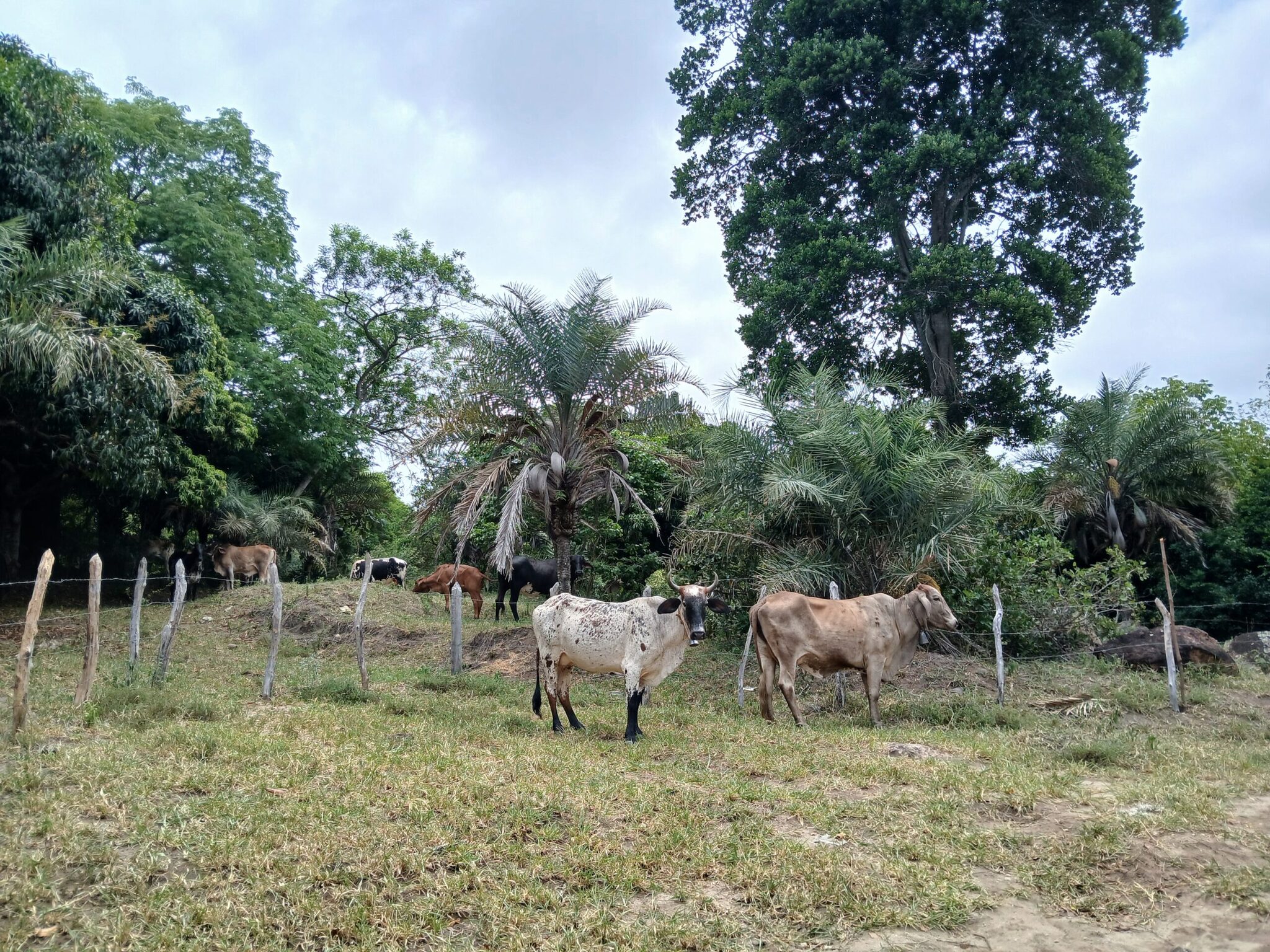
When Don Fernando died he left eighteen horses, a dozen chickens, ten ducks, three goats and sixteen white doves. He left three beehives with an uncountable number of bees in them. There were two feral cats who lived in the tumbledown pigsty, the one with all the space-invader machines that Don Fernando had collected long ago and the rats the cats couldn’t catch because the rats had grown too big. There were the family of sparrows who lived under the eaves and woke us up every morning, chirping and chattering, and then there were the swifts who flew up the coast from Morocco in the spring and made the farm their home all summer, an aerial display of sweeping and swirling arrows squealing and shouting at each other to get out of the way as they dived and swooped, catching flies. A hoopoe scratched about the farmyard floor with its crown of feathers as if it were a king and the farmyard floor a palace, though it was hardly that, and there was the nightingale who sang forlornly, all night long for a whole year just beyond the farmyard wall hoping to attract a mate. There were countless lizards and geckos and the odd snake and once, I saw a civet cat, it sat on the terrace that ran along the back of the cottages looking out at the view with its big startled eyes. And then of course there was the mongoose and the fox and we all knew that one of them would get the blame when a chicken or a duck went missing. There were four families of humans who also lived on the farm and they had three dogs and two cats of their own, but we will have to come to them another time.
All these the late owner, Fernando, Senhor Fernando, Don Fernando to you, did not necessarily call his family, yet they were his family, his extended family, nonetheless. Without him all would not have been so welcomed or so tolerated and therefore they were his family whether anyone realised it or not. Of course he had his favourites, of which you might suppose his horses were first, and he had his favourites amongst those of course. His horses were what he seemed to live for, what he spent his money on, yet all else were his family the same, adopted in some way, even the humans who would be the first to deny his embrace. ‘No, no, we’re not family!’ they would have said, but they were, in a way. The doves he said he bought to hire out for weddings. ‘The women love them!’ he once told me with a wink. The lizards and the geckos he saw out of the corner of his eye, and the bees he put on his funny suit for, the one with the funny hat. I don’t know if he knew about the civet cat. Only I saw that, or I think it was only me. It adopted us for several evenings you see and in doing so without anyone realising it, except me, because I was the only one keeping account of these things, it was adopted. And it was its big sad, lonely eyes that did it, the ones that could have swallowed up half the world. It turned around when it was sitting on the terrace and looked at me scared and wanted to run away, but then we both saw a dusty fox pass not fifty yards in front of us, unconcerned on its dusky way, with a big yellow moon and the shadows of the trees and the castle on the hill with its lights coming on, twinkling. That’s what did it. I can see it now still in my memory.
Of course Don Fernando didn’t just have this family, though when you saw him on the farm everyday you might think that this would be enough for one whose years were beginning to catch up with him. You did wonder perhaps sometimes whether he had another family somewhere, from some of the things he said and the gestures and the sighs sometimes, but that somehow they were all estranged, far away, no don’t be silly, it couldn’t be. Once, when he was beginning to talk to me in English after having said for a year he didn’t know any English, although by then I realised he had been listening to me in English for a year and understanding everything I said, he told me he had a flat in Paris or he thought he had one, but he didn’t quite know because he hadn’t been there for twenty years, and he presumed he still had it. I wondered, what sort of a person has a flat in Paris or thinks he has one, but hasn’t been there for twenty years and speaks as if twenty years were a lifetime ago, though its not that long, except that if twenty years could be a lifetime ago, a long time, another life, another set of relationships, another family, maybe. Maybe a family he had lost somewhere, somewhere along the way.
Another time we went to Montijo in the truck, the old Toyota with its faded orange cab, rust on the roof, in the doors, the sides, the frame, that struggled up the hill so much you thought it better retire right now, but when it finally got out onto the flat again it purred along as if nothing could beat it. ‘My office!’ Don Fernando declared sweeping his hand over all beside him as if to explain the discarded bits of paper, bills, receipts, plastic bags and the like strewn about the passenger seat and the foot-well, the old pens and wrappers from God knows where, God knows the world spends too much time on administration anyway! We swept them out of the way before I climbed up into the seat and sat down beside him. When we got to Pinhal Novo which everyone knows you have to go through if you go to Montijo from here, that funny town that seems very happy to have sprung up from nowhere, with the railway I suppose, Fernando slowed the truck and wound the window down and looked out across the busy street at a small sports shop and smiled. ‘That’s one of mine..,’ he said as we passed and with seemingly no intention of stopping to enquire how business was going and a wistful expression on his face as if that too was some other life better left alone. A few streets away and we slowed again, stopped to let a young woman cross in front of us on the crossing. She walked attractively she did, her arms and legs kissed by the sun, and for all the world it was like someone had put a fruit topping on Don Fernando’s ‘arroz doce’ and he lent out of the opened window again as she got to his side and he summoned from the depths of the rusty double bass that was his heart the appreciation, the felicitation, the words, are they words in Portuguese, yes I suppose they are, although they sounded more like the reverberations of an old lion, ‘Bom, Bom!’ he said, very slowly and very deeply, almost a growl, and she turned her head half in his direction and smiled a faint smile, embarrassed she was, knowing, smart and sassy, and walked on, well, what else could she do? Well now, I suppose you are beginning to get the picture.
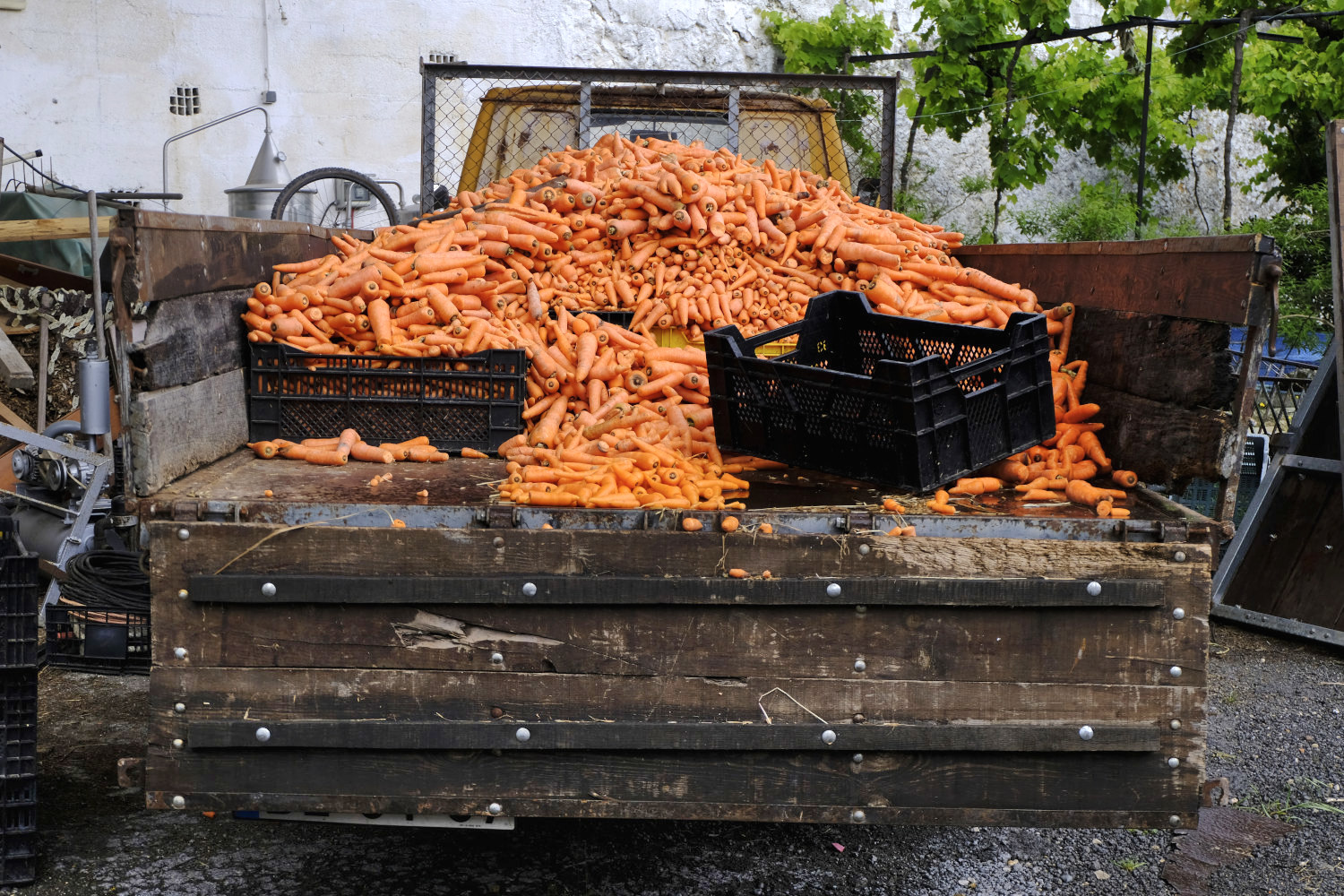
We went to get carrots for the horses. Carrots were 50 euros a ton then, I don’t know what they are now, cheaper, Don Fernando said, than hay or supplement. ‘Anyway I go every week, next time, do you want to come?’ he asked. ‘Yes’ I said, ‘but there’s an exhibition in Montijo, at the Camera Municipal, can we go there on the way?’ ‘Of course,’ said Don Fernando.
When we got to Montijo we swung around the narrow streets, the back of the truck sticking out around the corners, and neither of us wearing any seat-belts, it felt an insult to the old truck somehow, narrowly missing the parked cars and me thinking that I knew the way and Don Fernando pretending he didn’t, like he had pretended he didn’t know any English though he knew the way because he’d been coming here all his life. We parked at the far end of the main street though you might not have thought it a main street it had those one-storey houses on each side, the ones the Portuguese used to build everywhere, not shabby chic yet, though you can see that coming, and some of them are shops and businesses and then houses again in no particular order. Don Fernando eased the truck into a space between two cars like a ship into dock and we climbed out into the sunlight. We walked up the street, an Englishman with too much of a tan, and a Portuguese of naturally brown hue from the fields, from the farm, from his parents and his grandparents before him, and the Moors and the original Lusitanians a long time ago. We caught a few quizzical looks, intrigued perhaps, at this pairing not often seen in these parts, two men, from different countries, each, one side of sixty or the other. Don Fernando smiled and acknowledged a few ‘Good Afternoons’’ as we went along. I thought he might be bored coming here, a distraction from the trip for the carrots, but he seemed to be enjoying himself, and there was something else, what was it, a little nervousness, something sensitive that touched Don Fernando here as we entered the main square with its grander buildings and the Camara Muncipal and the entrance to the gallery inside. Don Fernando looked down at his shoes as we went in. They still had a little mud on them from the farm.
Well now I know what these places are like. I didn’t before, but now I do. We were greeted and shown around by a woman about sixty too, elegant, her dress made of a colourful cotton print, red and yellow and brown, her hair well kept, dark and shiny, her make up and nails just so. On her face she wore a tired expression but behind her eyes still hope and intelligence and a little fire. She sparkled as we entered, got up from her chair and introduced herself. In a thousand towns and cities in this world there are galleries like this, with matrons or patrons a little older or younger with hair and nails and expressions a little fresher or more tired. Each has been sitting in each for years hoping one day to become another centre of the cultural life of humanity, not quite the Metropolitan Museum of Art you understand but esteemed nonetheless, respected. There have been busy first nights, articles in papers, some sales to respectable and reputable ladies and gentlemen, but these have been but oasis in the many sandy and windswept days of solitary sitting and waiting. Maria had been sitting here for twenty years she said. She cast her eyes to the ceiling, to the past, as if it were last Friday, she could remember the weather when the gallery opened, the evening, the artists involved. She was coming to the end she said, she was going to retire.
She showed us around the work of the current resident sculptor, coloured ceramics of creatures and plants from under the sea. They displayed themselves on plinths of varying heights, their arms and legs articulated, moving, finely balanced by their artistic creator, go on, you can touch them, Senhora Maria said, and we did, and they jangled a little, played a light chiming symphony when we set them off together, beautiful. The artist was in his seventies, Maria continued, lived locally, had exhibited here many times. I suggested to her that living here, by the river, near the sea, he might have had some first-hand experience of marine fauna and flora which had inspired him, a diver perhaps in his younger days. Maria laughed. ‘No, she said, it all comes out of his head. He’s a lovely guy, but quite mad!’ She looked at me in a gentle, knowing way as this might be a revelation to me, a revelation of a pierced conceit, that the artist is but a childlike dreamer which she the curator must indulge, now don’t go thinking the artist is some kind of genius, he is not! She smiled. Well I didn’t think that all artists were like that. I didn’t think of myself like that, then, a childlike dreamer no, though now I do wonder. She didn’t know I painted. I told her of my conceit and we sat down at her desk and I showed her my website which wasn’t very good and my paintings which were a bit better and she looked at them kindly and said I could have an exhibition there if my paintings were of Montijo which they were not, they were of Palmela. Don Fernando stood behind me and smiled and put his hand on the back of my chair in a comradely way. She showed me some paintings on her computer by the sea creature guy and I said it looked like they had been painted with house paint. ‘Tinta da Casa!’ She said yes and seemed to be impressed with my recognition of such painterly mediums! Don Fernando stood at a little distance with his arms folded and seemed tired but he was not. I wandered off and looked at the sculptures again and Donna Maria and Don Fernando stood and talked, and I thought they were indulging me but they were not and their conversation drew on and became more engrossed and before I knew it I was the one feeling I was indulging them, and then I saw that Don Fernando was genuinely interested in her, in the gallery, in the space, in art, in another life.
Eventually, after a little thought, Maria took us to the back of the gallery and showed us the storeroom. It was piled high from floor to ceiling with the catalogues of past exhibitions. Twenty years of this and that, paintings, sculptures, drawings, photography, group shows, individual shows, the childlike dreamers of the Sul do Tejo, the burdens of the curator. ‘Take some,’ she said to both of us, eager to lighten the load a little. I did but Don Fernando declined. ‘Take some more,’ she said. I did, but Don Fernando politely declined again. Instead he prompted Donna Maria to talk some more, and he listened. They stood together, a man and a woman of a similar age, him nearly three times the size of her, she ensconced, embraced in his attention like an elegant fox and an old bear who, after many years of separate but parallel lives have decided to become friends. Don Fernando listened while she talked on, listening to some echoes of the past maybe, to a sunny afternoon of what might have been perhaps, just listening, just enjoying the moment of being there.
We said goodbye at the door with a kiss on both cheeks for each of us from Donna Maria, and we turned and waived as we walked back across the square and Maria waived back from the doorway before she returned inside. As we walked back Don Fernando did not look down at his shoes, not once.
Then we went to get the carrots for the horses. We drove out of Montijo in the old Toyota, out on the main road going North East, into the Alto Alentejo up by the river, towards Coruche. The land flattened out and the road ran straight busy with cars and vans and lorries, carrying pallets and trays of vegetables, cattle and pigs and horses in horse boxes, signs on their sides, Barros e Filhos, Produtos Agricolas. On either side of the road now fields a little greener, tall rushes, then scrub and cork oak, then pine trees and then back again to fields. The sun shone through the tall plane trees that lined the road for a while, casting bright shadows, and then the trees disappeared leaving everything to the heat. The Toyota made good time, running along nicely, our windows open, our elbows pointing out into the oncoming breeze. We shouted to each other over the noise of the engine, the traffic, laughing, pleased to be on the road, Don Fernando Quixote, Toyota Rocinantes, and me an unlikely Panza, the green plains of the Alentejo passing for the dust of La Mancha.
Eventually we slowed and Don Fernando found a gap in the traffic and turned off the road into a large open, gravel yard. This was the place of the carrots. We proceeded to the far end of the yard where a large modern house stood, plonked down in the middle, and behind it, immediately behind it, like the house was being followed or something and had no room to breathe, let alone a garden, was a huge great big shed, fifty feet high and three hundred feet long made of steel girders and corrugated siding. Don Fernando slowed up in front of the house and turned to the left and joined a queue of other vehicles, vans, lorries, pickups, waiting to file round to the back of the house and into the shed behind. As all the vehicles waited for their turn Fernando idled the engine and told me about the owners of the palace of carrots, the business of carrots, how this was the modern way of these things now in the Alentejo, you’ll see in a minute, he said, how the owners had made it big in cleaning and processing, rich, and here is their house, all sparkling new and he had known them when they were all much younger, he was friends with them, yes, and oh, wait a minute, here they come. A couple in their early sixties came out of the front door in front of us just at that moment. They closed the door behind them and walked down the big front steps, their matching blue jeans bluer than most, their shirts brand new, the leather of her handbag and their shoes all shiny. They smiled and waved at Don Fernando, who smiled and waved back, exchanged a few words as they passed us and walked over to their car, a Mercedes, latest edition, got into it and drove away. I looked over to Fernando and caught his eye. We both laughed.
As we proceeded to the back of the shed the noise of machinery started to get louder. A couple of large lorries filled to the brim with carrots filed off to the side and we passed round them with the other customers to the queue behind. As we started to move inside the scale of the operation began to reveal itself. The shed was about the size of half a football pitch, the ceiling way up high above our heads, three sides open to the elements. We passed slowly down to the far end, waited our turn, stopped when we got to the head of the queue and got out. On the far wall an array of large processing machinery buzzed and whirred, hummed and rumbled. At one end the trucks packed with dirty carrots from the fields were unloaded, poured in their hundreds into a big hopper then via several conveyor belts, cleaned and sterilised and graded through a series of large metal tanks and cylinders, rattling along to be eventually tipped from a great height when they reached the other end into large plastic containers. A man on a tractor spun round on the polished concrete floor, picking up each container just as it filled up and stacked it on top of many others, forming a great wall of carrots to the side. When he saw Fernando he stopped for a second and exchanged a few words, difficult above the din. Fernando showed the man a piece of paper with a number on it and the man nodded and span round again, waited for a new container to fill before picking it up with the long arms of the tractor, reversed, turned deftly and tipped the carrots into the back of Fernando’s truck.
The man spun round again to pick up another container. The carrots, clean and fresh and bright orange tumbled down into it and stopped, the container half filled. The tractor man waited. There were some shouts from the other end of the line, and then some more back and forth and then everything came to a halt. The noise lessened. ‘Something wrong with the machinery,’ Fernando said. Everyone started to look at each other, the line of customers behind us in their vans and pickups, wholesalers, market traders, horse owners. Immediately behind a women got out of her van and walked up and down in her boots and riding breeches, her long grey hair and face dry from years in the sun. She looked at me a little embarrassed, carrots, after all were cheap food for horses, what was a foreigner doing here at the carrot shed, what will become of us, we all have to get by you know….!
I turned and walked a few yards out of the end of the shed. I stood in the sunlight and looked out over the green fields at the back. Some bulls stood about munching, ruminating. The nearest looked up and stared at me. I went back in.
While we waited, Fernando waved his arm over the expanse of the cathedral of carrots and suggested I paint it, ‘not now of course, but you could,’ he said. ‘Yes, I could,’ I said though such things can be difficult, to get the scale, the vastness of the machinery, the smallness of each carrot. I wondered, is it a painting, a sculpture, an installation, modern, postmodern, why are they cleaning the carrots, do they need to clean the carrots? After a few minutes the machinery whirred into action again, some more shouts and waving and the carrots started to pour out of the end of the line. The tractor man tipped another container full into the back of the truck and went back for a third, the last. As he turned fully loaded he caught my eye, lost his concentration and missed his tip, some of the carrots spilling out onto the floor. He stopped and swore, and got down from his tractor, went off and came back with a shovel and a broom. He leaned the broom against the side and began shovelling the spilled carrots back into Fernando’s truck, his professional pride dented. I took the broom and swept the remaining carrots into a neat pile to make it easier for him to scoop, but after a couple of brushes he waved me away, dismissively. Fernando leaned up against his van and didn’t move, never interfere with a man and his work, you should know that, he smiled.
Everything set straight, the tractor man signed the paper with Fernando’s number, said goodbye to Fernando, not me, and we both climbed back into the cab. Fernando put the paper on the floor with the others, revved the engine and we eased back out of the yard, much heavier than before. The old Toyota didn’t mind though, a bit slower to get up to speed, but it soon got there. We headed out on the Coruche road then turned south again, straight for a while, scraping the edge of Montijo, a few roundabouts, some modern flats, just built, just being built. Fernando said he wanted to stop and get some lottery tickets, he always did every week when he came back from the carrots, a superstition, of faith, for good luck. We went round another roundabout and stopped at a shop, a newsagent, a cafe, it hadn’t quite made up its mind which, the apartment blocks going up around it on the edge of town, like a Sims game, the people going in and out looking a bit lost. Fernando bought a fistful of tickets, the numbers chosen by the machine. People stood around drinking small bitter Portuguese coffees but she had nothing else, ‘I’m a bit thirsty,’ I said, but she had no cans, no bottles of water, the grand player of the Sims game hadn’t got to that level yet.
Back on the road, Fernando asked if I minded if we stopped somewhere else on the way back. He wanted to go and see a man about a horse, he said, a phrase that in England might mean something a bit dodgy, but no, Fernando wanted to go and see a man about a horse. ‘He’s got a horse for sale, a mare, I might be interested,’ he said We headed east of Palmela, the road ran straight through endless fields of vines right up to the edge of the road, grapes red and purple, bulging off their stems. I said, ‘Ok, I don’t mind, but I’m still thirsty though.’ The van ran on for a mile or so, and then Fernando pulled into the side of the road. No traffic passed, some houses a little way off. Fernando opened his door and got down out of the cab. ‘Hold on one minute…,’ he said and ran across the road and disappeared into the rows of vines, rustling and tugging and came back grinning, two large bunches of grapes in his hands. He opened the door. ‘Here you are, you said you were thirsty,’ he said, and handed one of the bunches to me. He got back in the cab, laughing, ‘I used to do this when I was a kid,’ he said, reminiscing. He drove on with one hand on the wheel and the other tearing three or four grapes off at a time and putting them in his mouth, this conspiracy of boys making the grapes taste sweeter.
The equestrian facility stood incongruously up against the bank of a motorway intersection, running south again to Setúbal. We pulled up and parked in the yard by a line of stables. Fernando told me to wait while he went off to find the owner. Horses stood with their heads leaning out of the stable block and beyond a large oval area of sand surrounded by fencing with a couple of teenage girls on their ponies going round, an older woman looking on. I waited. The horses waited. The shafts of the sun striking lower now, through the trees and the dust. Fernando came back with the owner, a swarthy young man in breeches and boots and a loose white shirt and Fernando motioned for me to follow.
In the shade of another stable block, two or three other horses stood in their stalls. The flies buzzed, around the horses, around the horse’s owner, around Fernando and me. The horse in question was a beautiful, middle-aged mare, tall and sinewy and white. She leaned her head out of her box and listened, patient, stoic, like most horses, as Fernando and the owner talked. I’m not sure if I would have understood what they were saying even if I could have translated it. They talked on without seeming to want to come to any sort of conclusion, let alone a deal. The flies buzzed. I sat down on a bench a little distance away and waited. I thought the flies would follow me like they always seem to, but they didn’t. The flies buzzed around the owner and Fernando, around their conversation, around the horse, who flicked her tail and mane now and again, patient, stoic. The late afternoon sun started to take on an orange hue, the heat the same. Now and again Fernando would look over at me and nod as if emphasising his point to the owner and I would purse my lips and smile back. ‘See, the silent horse expert from England thinks the same, and look, there are no flies on him!’ his look seemed to say. The owner smiled too. Eventually they stopped, we all shook hands and filed out of the stable block. We walked back over to the van and said goodbye to the owner, Fernando and myself raising ourselves back up into the cab, all saddled up and drove off.
On the way back Fernando said over the noise of the van, ‘I didn’t like the horse, I’m not going to buy.’ I asked if the horse was too old, but Fernando said no it wasn’t that. ‘I didn’t like the horse.’ he said again. It seemed strange perhaps, but then again, I suppose there are judgements of character to be made in all of this, there was a point to the standing and talking. All horse owners know that a horse has a character, a horse is a person. And then there are the others and their personalities. Who is going to get on with whom, who is going to be jealous of the newcomer’s arrival, put up a fight, give or get given the cold shoulder? Who will run off with the newcomer to the far end of the field and remain ensconced for weeks, the flicking of tails in a haughty manner, at the flies, at the others, playfully biting each other’s ears and not coming in for their carrots on time? Horses are social animals, like humans, and contrary too, like us. They can stand all day or week on their own and then come together in a huddle, rotating each in turn to the outside to give the others relief from the wind and the rain. A mother will put herself on the sunny side of her foal to give her shade, until she is ready. On the other hand, I have seen one regularly push a container of carrots away from the other’s face in the middle of eating, out of jealousy or spite. They will feud and bully each other. Fernando knew his horses, he worked for many years on a farm in Spain with one hundred of them, one became famous in a television commercial for a Spanish brandy, he said. When he had fed his horses in the evening he would sometimes spend time with them in the field, standing in the middle of the group while they gathered round, stroking their ears or necks and talking to them in a low voice. They trusted him, they had to, he fed them, but more than that he had been there at their births. Once he showed me, a day after a new foal had been born, he carefully entered the pen with the mother and her new born son. The mother looked alarmed, but stood back, rolling her eyes in consternation while Fernando crouched down next to the foal, introduced himself, his voice, his touch, his smell. ‘I have to,’ he said, ‘otherwise they would not follow me, understand me, trust me.’ The mother gradually relaxed and after half an hour Fernando retreated, the mother standing tall and proud again over her own unique creation.
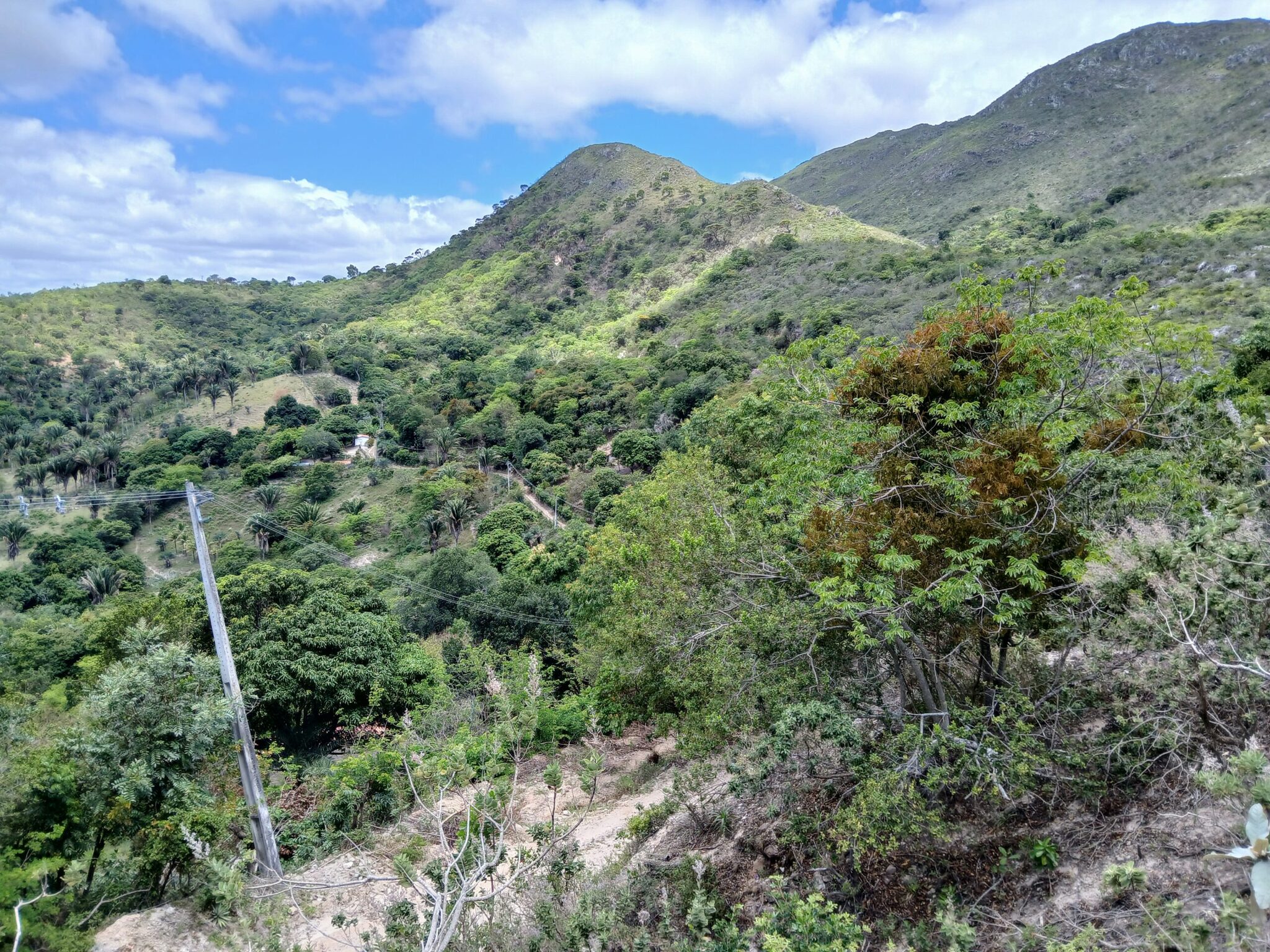
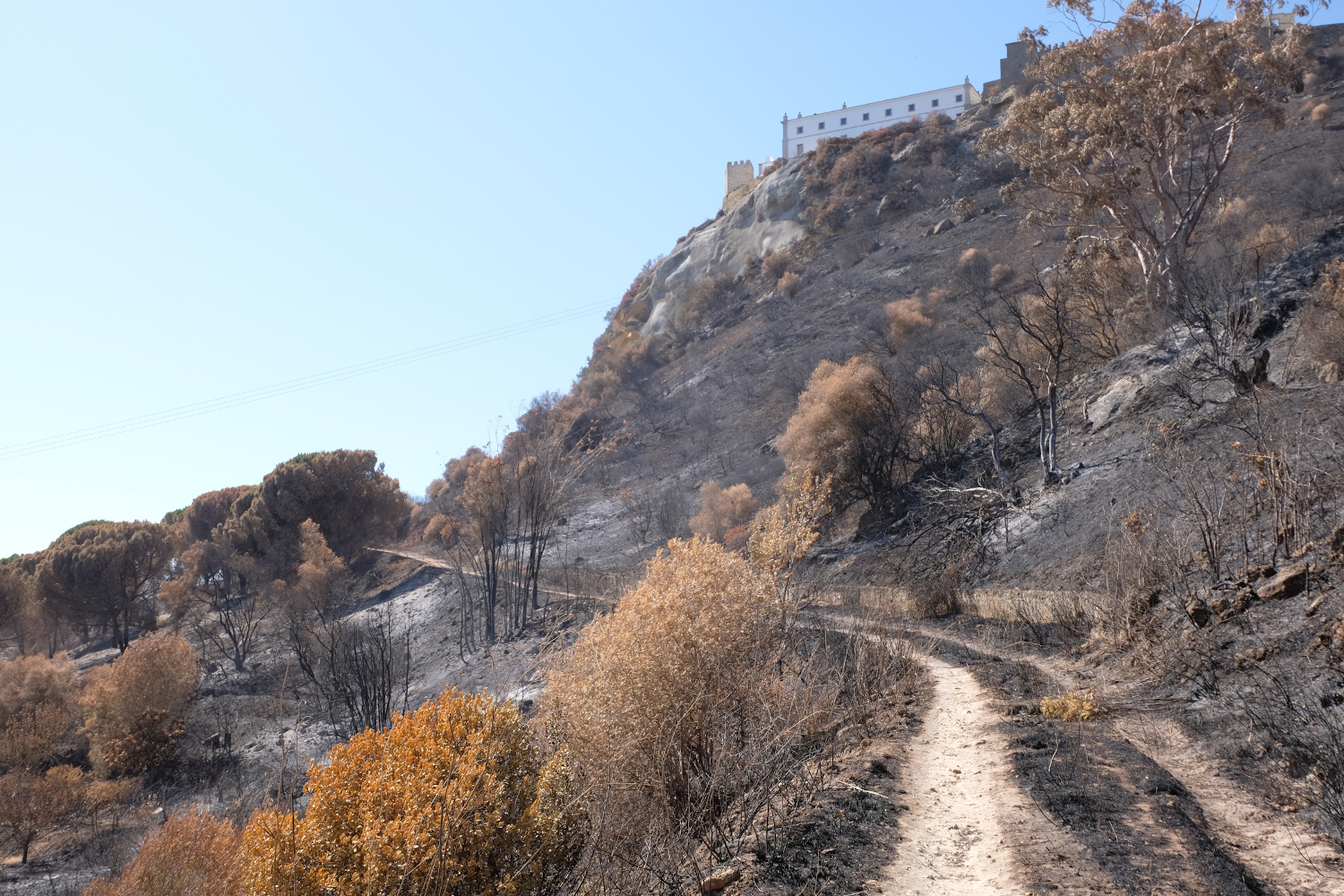
We went home, under the motorway, slowly up the long hill to the junction at Aires, the castle looming up larger in our vision as we got nearer, the trees on either side of the road, the houses appearing, the supermarket on the corner. We turned right, ’round the hill, past the viewpoint and the bus station of Palmela and then right again, down to the farm and the valley, the beautiful, age old, Valley of the Barrels. At the bottom Fernando turned down the track, careful not to spill any carrots. He stopped and I got out and swung the big green metal gates open. Fernando drove down to the end of the yard, parked up and turned the engine off. It rattled to a halt. I followed in. Fernando got out of the van and we stood together for a moment. The silence and calm of the farm enveloped us.
After a few minutes the horses, who had heard the gate and the truck coming in and knew its meaning, started to come up from the field neighing in hungry anticipation. Fernando opened the back of the truck, carrots spilling on the ground. He brought several old plastic containers over and started to shovel carrots into each of them, then took them over to the side and stacked them ready for the next week. Did he want any help, I asked, tentatively, we were comrades now weren’t we, I don’t know..? Fernando looked unsure and then seeing my feeble attempts with the shovel let me stand back, he could do it quicker, easier himself he said. I stood back. I went away eventually to make my dinner, but he carried on, he said he didn’t mind, but he looked tired and stood there for a while the energy drawing out of him, somewhere at the back of his eyes, and then a sudden falling inside himself. I could feel it. I stood for a while at my door wondering whether he would recover, but in a few minutes he seemed to. I went to make my dinner and put my head out once or twice, but he was back at it, in the evening, ferrying carrots here and there, the sound of eighteen horses munching in unison, you could hear them into the night, long after the darkness had closed in. Eventually Fernando left to go up to his house in the village and the sound of the cicadas took over, and that is enough to make anyone feel sleepy, God rest their souls.
Several days afterwards I was with Fernando in the big hall on the farm, the one he used to store his old stuff. There was a lot of it, unwanted furniture, a pool table, boxes of old screws and nails and bolts and bits of metal, china and glass and mirrors and pictures. I’d given him a painting and there it was up on the shelf, pride of place, but starting to grow dust already. We looked at it and then I noticed another, lower down on another shelf, a portrait of a young woman done in a popular nineteen seventies style. I asked him who had done it and eventually he said he had himself. ‘You are an artist too.’ I said as we walked back out into the yard and he said, ‘No, you are the artist, not me!’ I wasn’t sure. Maybe we both were. Maybe we all are.
A few days after, he said he was going to the local fair at Quinta do Anjo and asked me if I wanted to come. He asked Antonio, a short wiry guy, the same age, who lived on the farm too. He had been growing vegetables on a plot round the back of the cottages. He would wake me up in the morning banging the metal head of his hoe onto the shaft by way of the tiled pavement outside my window and I would open it and shout at him to do that somewhere else, or preferably before he got there. He always ignored me. About lunchtime he would run round to his flat above the front gate exited to show his wife his new aubergines or peppers, or onions, he’d never grown them before. ‘Heh, look at these!’ he would say, only to be rebuffed by her bemused smile. ‘You can get them up at the shop just as fresh, for half the effort!,’ she would reply, and indeed, around here, you could. Perhaps that was beside the point though. On the day of the fair Antonio didn’t turn up. Fernando stood outside in the yard waiting for me to come out of my house and join him. I sat in my house, unaware he was out there, waiting for him to knock at my door. Understandably perhaps, regretfully, none of us went to the fair that day, such are the fears of intimacy, sometimes, between older men.